S Neuro: Official website for an early-stage ADHD startup
Role
Product Designer (paired with Jen Huang)
Team
Product Designers, 1 Founder, 1 Developer
Timeline
Sep 2025 - Oct 2025
At a Glance
Problem
S Neuro's site needed to introduce a complex ADHD-focused AI companion to two very different audiences (potential users and prospective sponsors) without overwhelming either, and without finalized product visuals to lean on.
My Role
Designed the marketing site collaboratively with Jen Huang. Owned research synthesis, visual structure, and the dual-audience strategy that shaped the redesign.
Outcome
A redesigned marketing site that prioritized clarity and structural credibility over polish, delivered to S Neuro's founding team for ongoing iteration as the product matures.
Where the original site was failing
Before redesigning anything, we mapped where the original site was failing each audience.
Lack of clarity
Information overload
Credibility gap
Lack of clarity
The original site introduced complex ADHD concepts without scaffolding. Both casual visitors and technical sponsors struggled to understand what S Neuro actually did.
Information overload
Long paragraphs and dense layouts created friction. For ADHD users specifically, this was the worst possible introduction to a product about cognitive support.
Credibility gap
Without finalized product visuals, the site needed to convey scientific rigor through structure and tone alone. This mattered most for sponsors evaluating an early-stage company.
Solving all three meant designing for two audiences with different expectations, in the same site.
What we wanted the redesign to do
Three goals shaped the redesign, each one designed to serve both audiences at once.
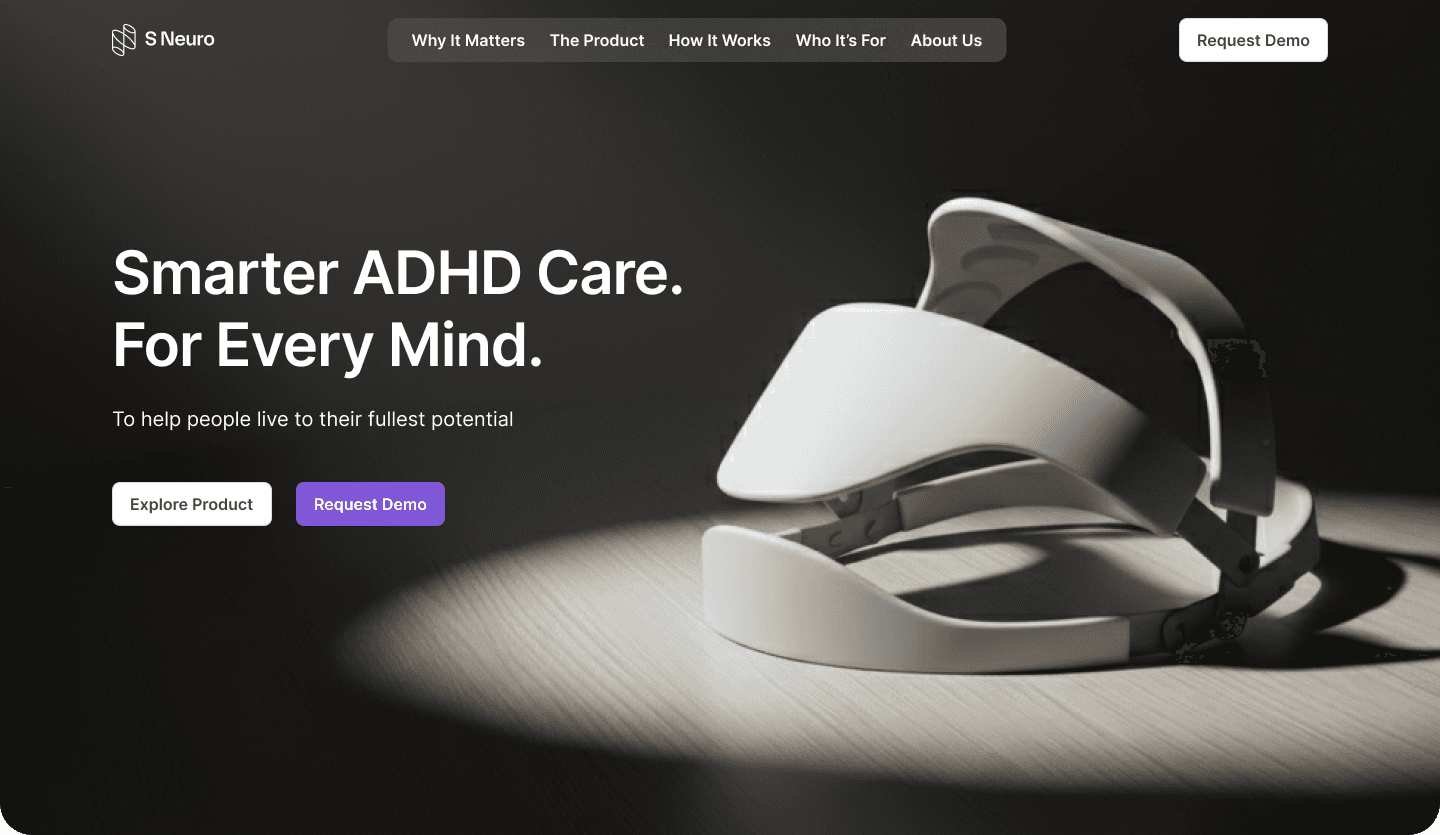
Before
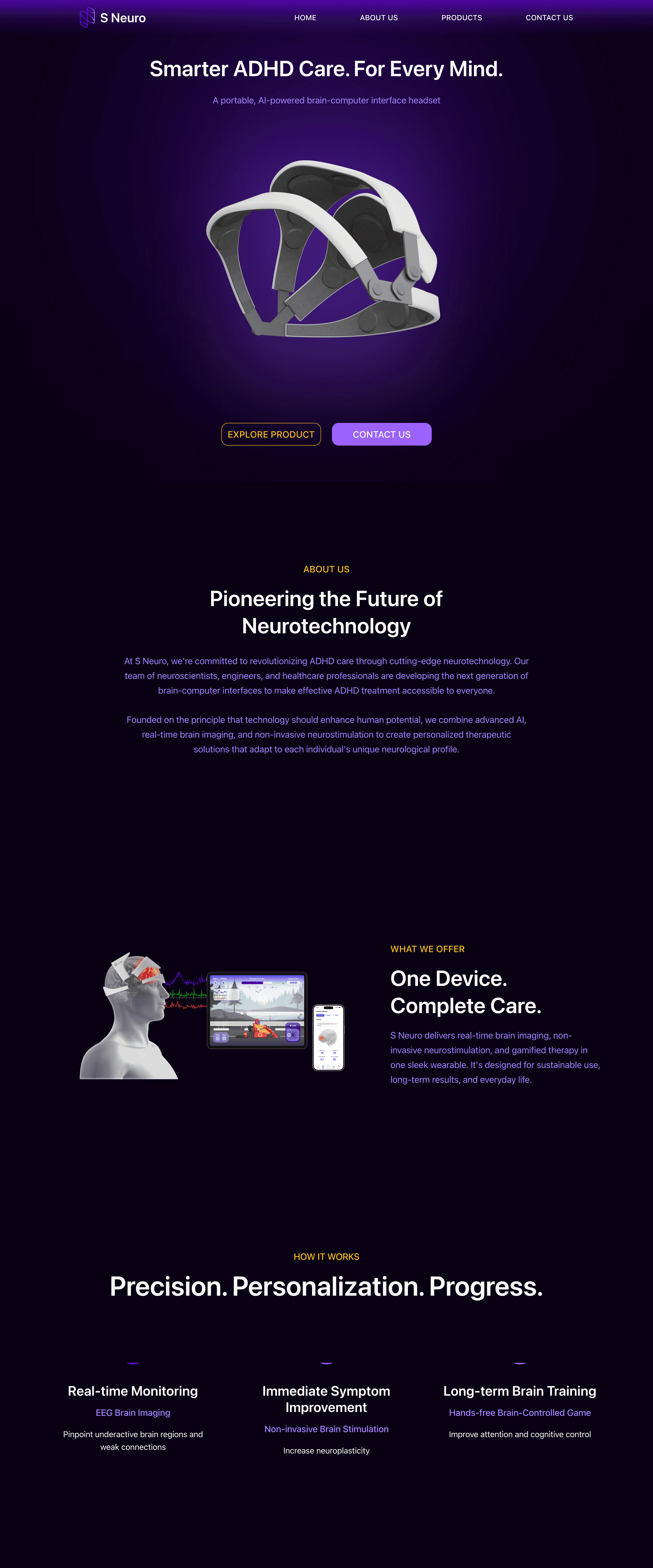
After

Reducing what the eye has to process
The original site presented dense paragraphs in low-contrast type. We cut text density, increased spacing, and simplified structure so visitors could absorb one idea at a time.
For ADHD users, this reduced cognitive load. For sponsors, it signaled mature design execution.

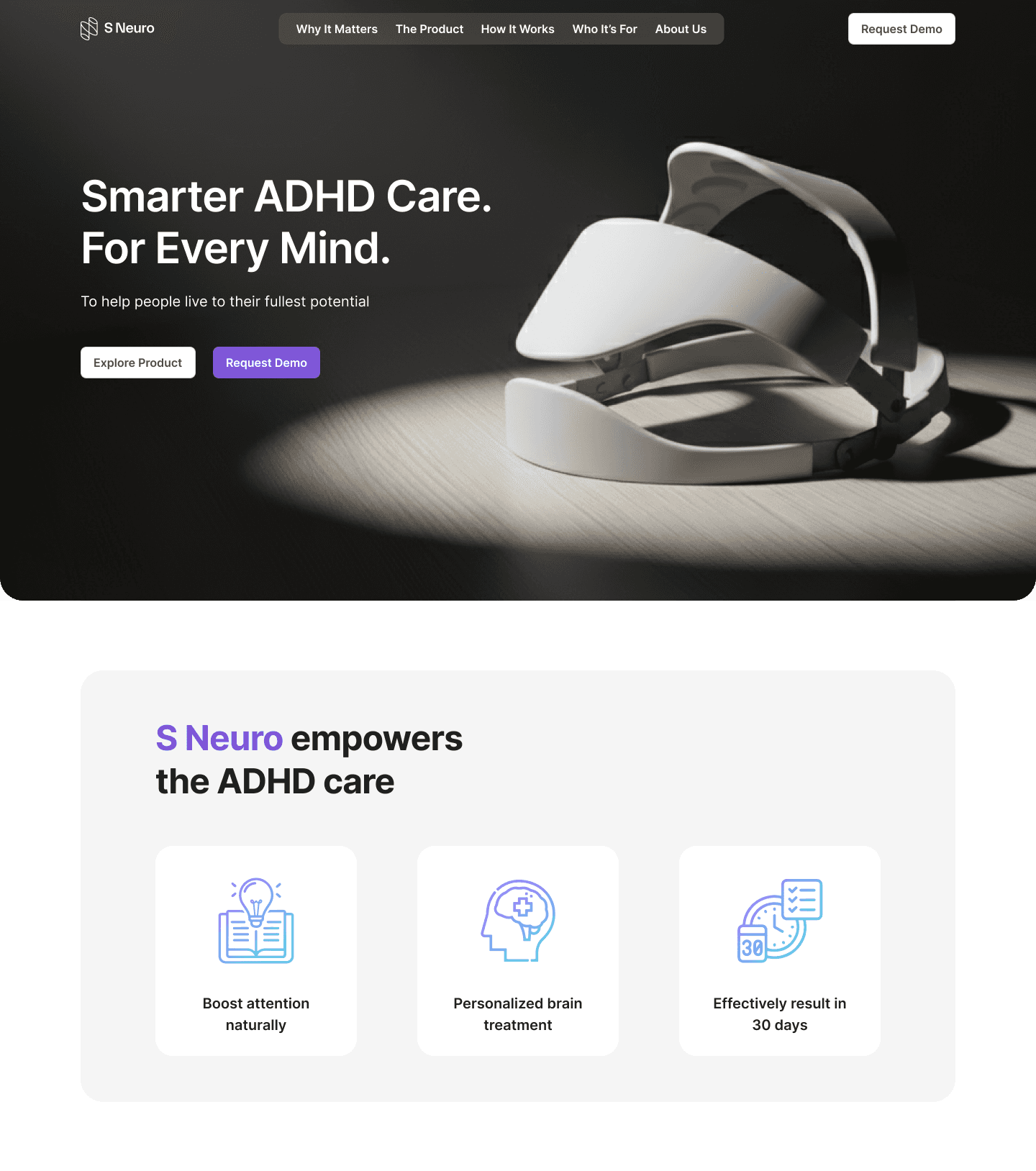
Making it obvious where to look
Original layouts had product imagery and text content competing for attention with no clear focal point. The redesign introduced clear primary messages per section, supported by spacing, alignment, and grouping.
For users, this meant less guessing. For sponsors, the site became easy to skim and understand quickly.
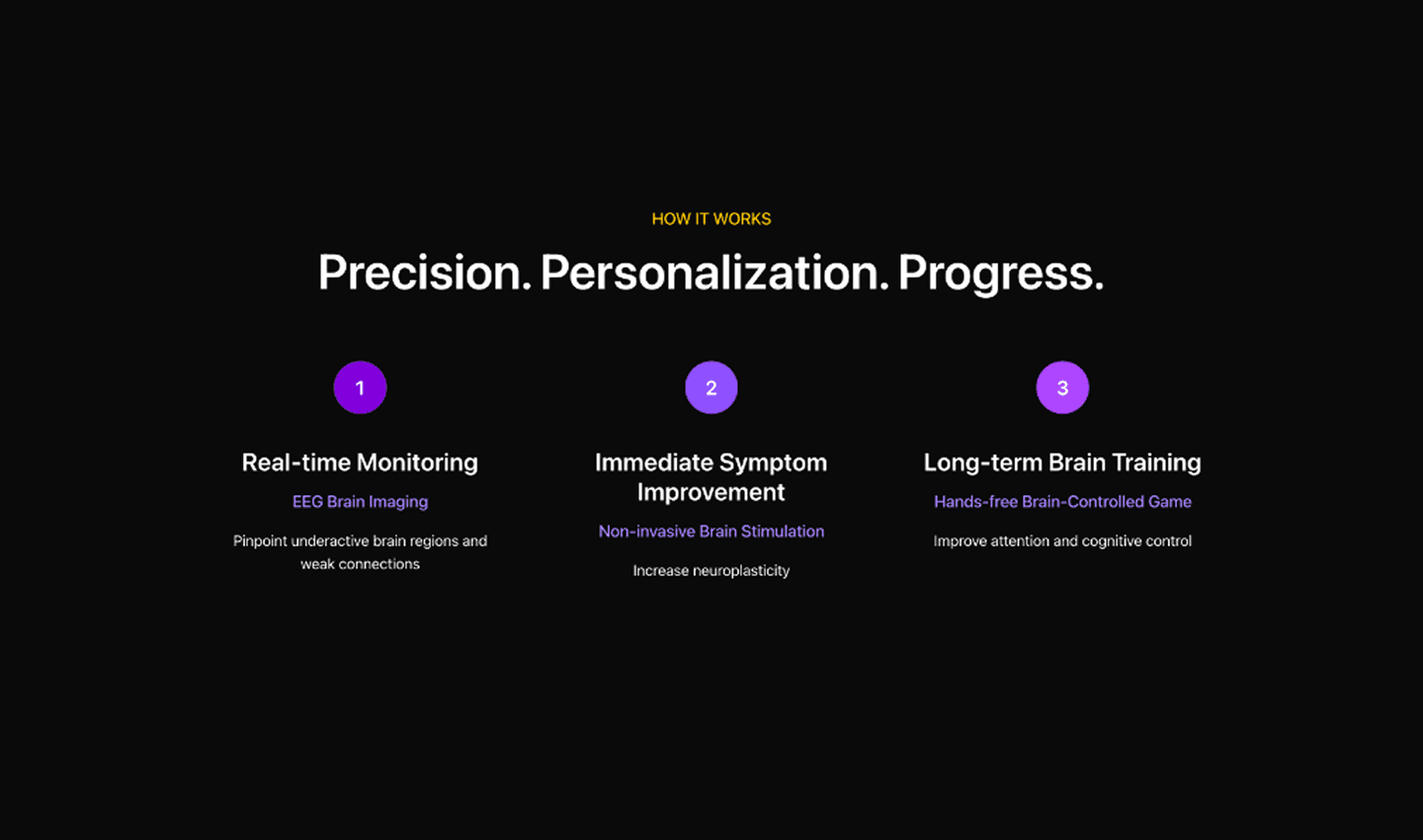

Breaking content into smaller chunks
The original site used long blocks of unstructured text. The redesign introduced modular cards, distinct sections with clear boundaries, and predictable structural patterns.
For ADHD users, this made the site processable in pieces. For sponsors, it made the value proposition findable at a glance.
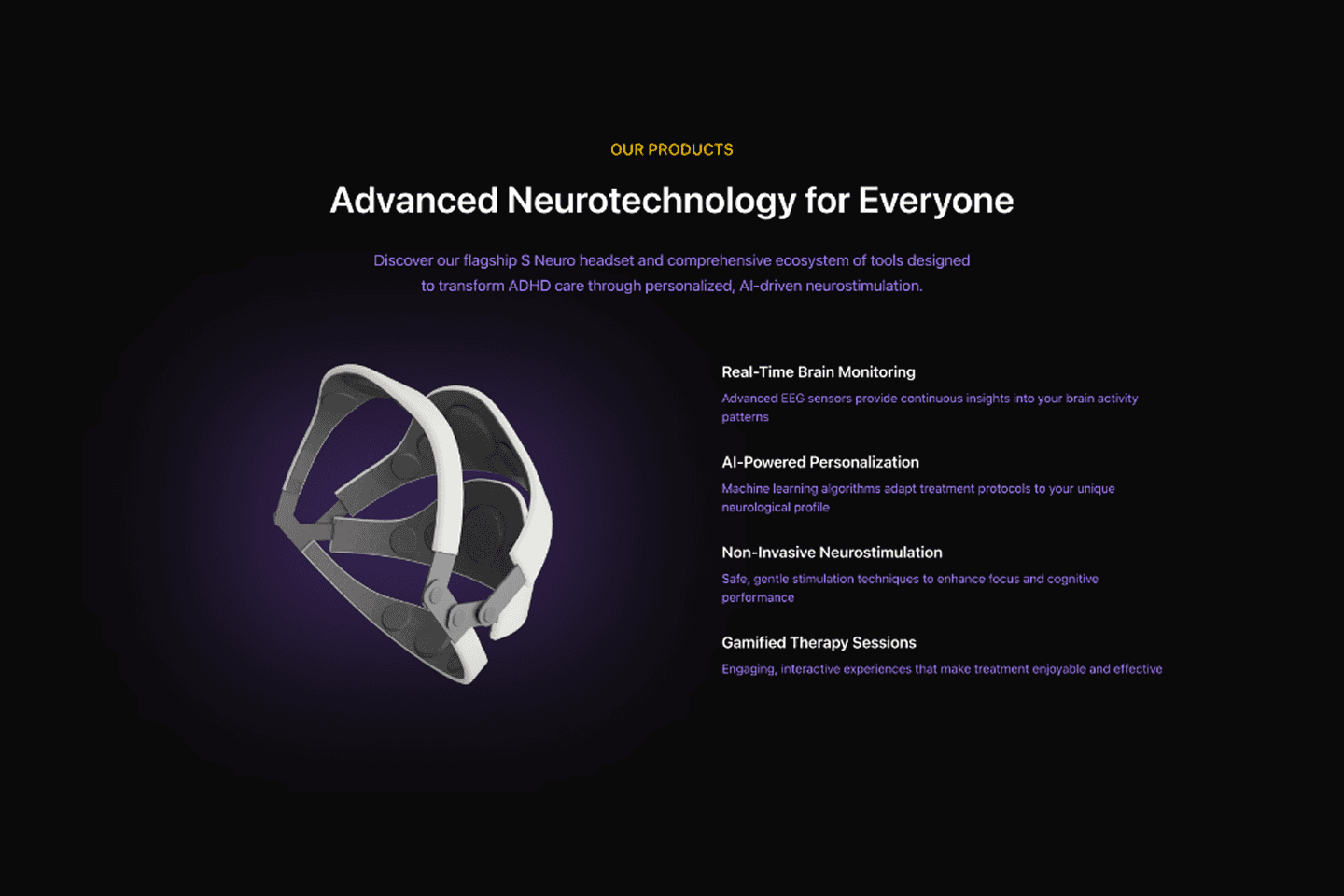
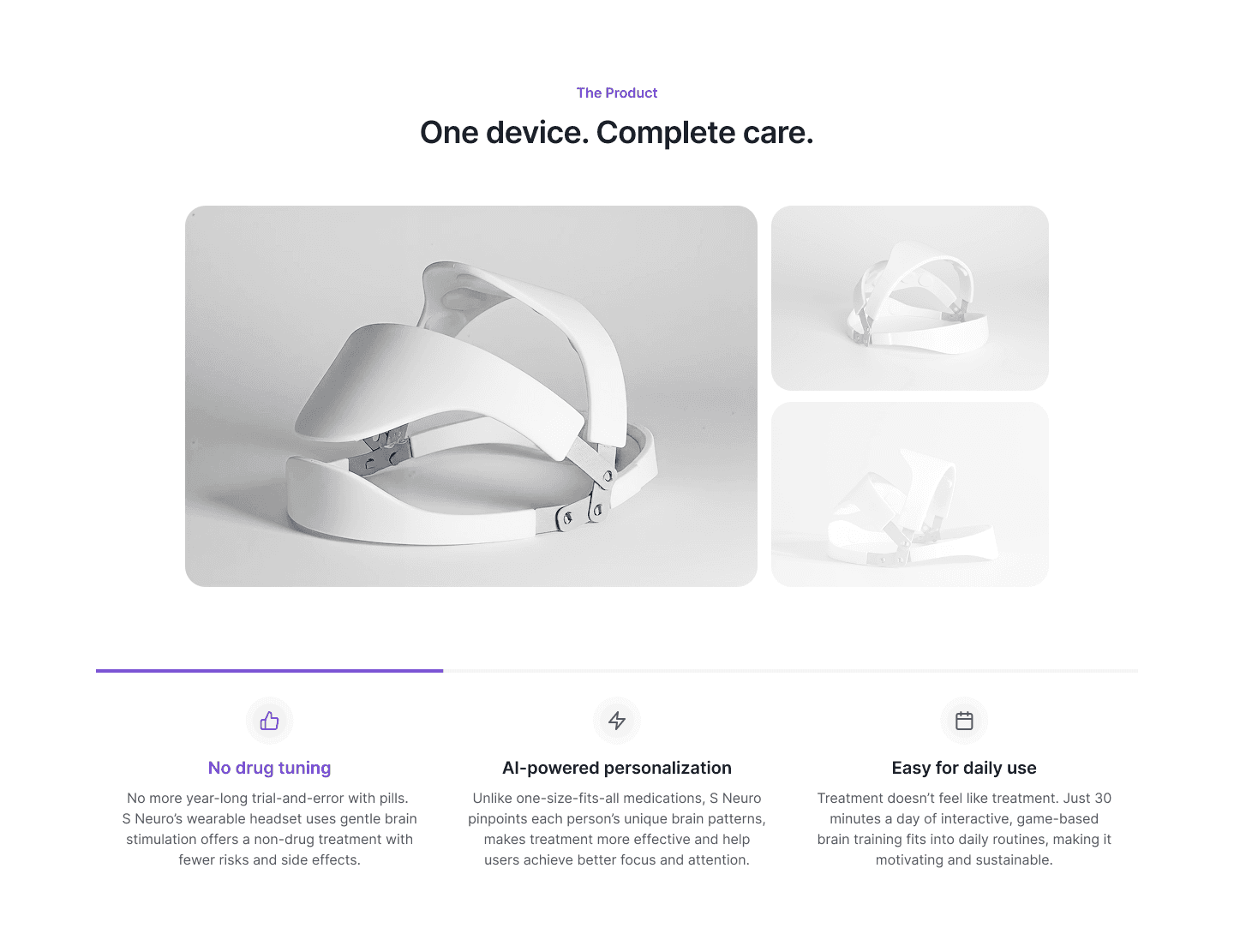
The combined effect was a site that respected its users' attention and sponsors' time.
The redesigned site
The redesigned site delivered on both audiences at once: calmer for users, more credible for sponsors.

What I took from this project
S Neuro taught me that early-stage marketing design is rarely about styling pages. It's about positioning a company for multiple audiences at the same time, often before the product can speak for itself. Every spacing choice, every hierarchy move, every content cut was simultaneously serving a potential ADHD user and a prospective sponsor. That kind of multi-audience thinking carried into how I approach product design now, especially in early-stage contexts.